
Independent plumbing resource · Marietta, GA
Start with what is leaking
Visible drips, unexplained dampness or sudden water flow each give a provider different starting information. Choose the closest description below—you do not need to identify a broken pipe or decide on a repair.
Which description fits?
Use the closest match in your notes; “source unknown” is useful information too.
Visible drips or pooling
Note where water appears and whether it happens continuously or when a fixture runs. Water beside a pipe does not establish where the leak began.
Dampness without a source
Describe the stain, wet surface or damp patch and when you first noticed it. Hidden plumbing is one possible cause, not a confirmed diagnosis.
Sudden or heavy flow
A burst pipe is one possible cause of sudden spraying or rapidly spreading water. Prioritize safety over identifying the break or taking photos.
Safety comes before leak details
Do not wait for an inquiry response during immediate danger. For gas odors, electrical hazards or severe flooding, move away from the hazard and seek appropriate direct emergency or utility assistance.
Do not enter standing water near electrical equipment, touch wet electrical fittings or approach a sagging ceiling. Keep observations to places you can reach safely without entering flooded, cramped or unstable spaces.
Do not open walls, remove equipment covers, loosen pipe connections or test fixtures to recreate a leak. If a location is unsafe or inaccessible, report that limit instead.
The wet spot may not be the source
Water can travel along surfaces before it drips or becomes visible. A damp cabinet, ceiling stain or wet pipe connection tells a provider where to start looking—not necessarily which part needs repair.
An assessment investigates the source and extent of the problem. Ask what observations or testing support the diagnosis, whether access is needed and what remains uncertain before agreeing to a repair scope.
If opening a wall, ceiling or floor is proposed, ask who handles that work, what permission is needed and whether restoration is included in the written estimate.
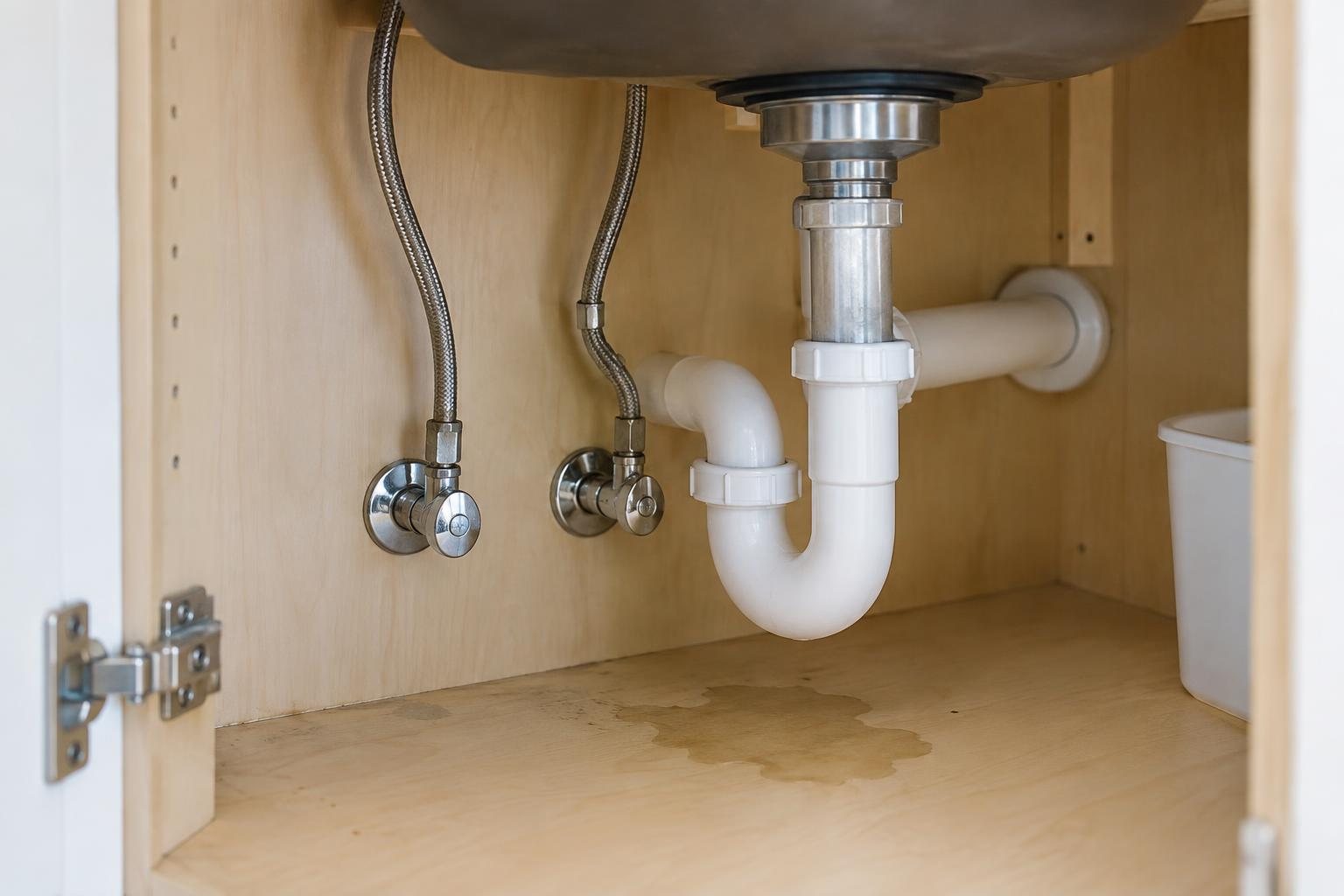
Leak inquiry checklist
Gather what you can safely report
Keep notes brief and leave unknown details marked “not sure.” Do not delay urgent assistance to complete this checklist.
01
Describe the location
Name the room or outdoor area, the nearest fixture and the surface where water appears. Distinguish a pipe you can see from a suspected leak behind a wall.
02
Record current flow
State whether water is flowing now, has stopped or cannot be checked safely. Add when it began, whether it is dripping or spreading, and any pattern you already noticed during normal fixture use.
03
Add optional photos
If safely accessible, take one wider photo showing the location and one closer view of the visible water or dampness. Photos can support an initial description but cannot confirm a diagnosis; keep people and personal documents out of frame.
04
Note access and authority
Record your ZIP code, property type, preferred timing and whether you are the owner, tenant or manager. Note who can authorize work and arrange access, especially if the owner is off-site; desired timing is not confirmed availability.
Describe the leak, not the repair
Provider inquiries are currently unavailable because recipients and routing arrangements have not been established; Marietta Plumbing is an independent resource, not a contractor or emergency dispatch service, performs no plumbing work and guarantees no response, and any future inquiry would require providers to confirm diagnosis, pricing, coverage and appointment availability.